About the Study
Delivering Transportation Solutions to the Region 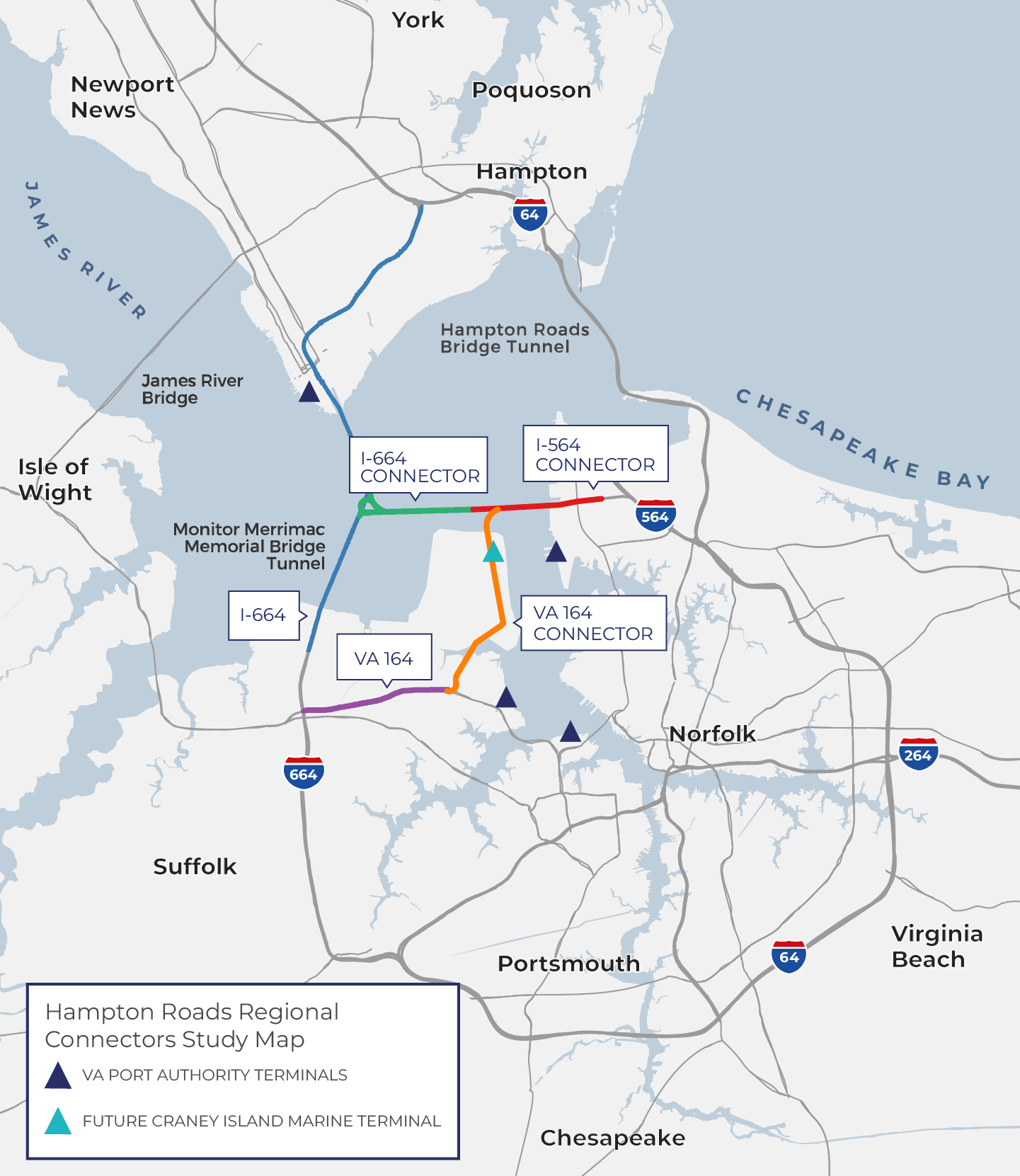
The HRTPO kicked off the Regional Connectors Study in June 2018 with funding from the Hampton Roads Transportation Accountability Commission (HRTAC). The study focused on Hampton Roads connectivity through the lenses of congestion relief, economic vitality, resiliency, accessibility, and quality of life.
The HRTPO Regional Connectors Study builds upon the work examined in the Hampton Roads Crossing Study (HRCS) Supplemental Environmental Impact Statement (SEIS) including the following segments:
- VA 164 widening
- I-564 Connector
- VA 164 Connector
- I-664 Connector
- I-664 widening (north of College Drive)
The Regional Connectors Study provides a long-term vision for connectivity improvements between the Peninsula and Southside, with recommendations for segment tiering and further evaluation.
View the segment tiering proposed recommendations to learn more about the study.
Collaboration is Key
A successful regional study requires input and support from all key decision-makers. The HRTPO continues to engage two oversight committees in the study process: the Working Group and Steering Committee. Technical experts from seven area cities, regulatory agencies, and other key stakeholders, such as the U.S. Coast Guard and U.S. Navy, Virginia Port Authority, Federal Highway Administration, U.S. Army Corps. of Engineers, Virginia Department of Transportation, and HRTAC comprise the Working Group. Elected officials from the same seven cities, and representatives of other key stakeholder groups comprise the Steering Committee. The HRTPO works with these committees to establish study goals and objectives, and review analytical data, results, and recommendations.
Public Input is Critical
Public input is critical for the Regional Connectors Study to address the diverse transportation challenges of the region’s traveler’s – whether you’re a resident, freight operator, or business owner. The HRTPO needs to learn more from the region’s drivers about day-to-day needs, pain points, and ideas for improvements. The HRTPO encourages public review and feedback as the study progresses. This public engagement includes commenting on proposed projects at community meetings, local information kiosks, and through the comment form on this site.
Study Approach
The Regional Connectors Study includes:
Phase 1 Scope
- Stakeholder interviews
- A regional public survey
- Existing traffic data collection and analysis
Phase 2 Scope
Scenario planning
- Future traffic projections and analysis
Phase 3 Scope
- Segment evaluation — cost and construction complexity review, permitting challenges, project readiness, congestion relief
- Public meetings
- Regional Connectivity Symposium
- Scenario testing and traffic operational analysis
- Segment tiering
Final Summary Report