Carter G. Woodson, The Man That Started The Movement
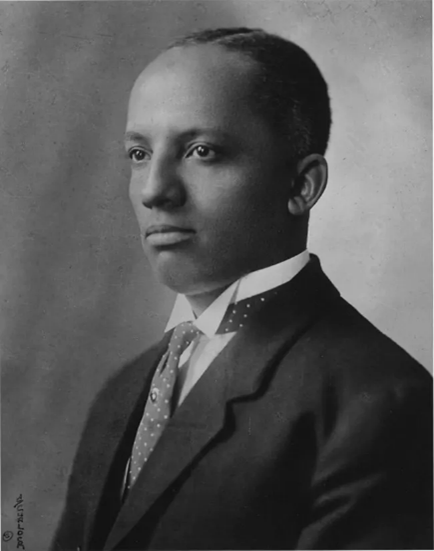 | Ever since Carter G. Woodson started Negro History Week in 1926, which President Gerald Ford later recognized officially as Black History Month in 1976, our nation has been taking time out during February to celebrate the contributions and accomplishments of Black Americans. In urban planning and transportation specifically, Black Americans have played a pivotal role in shaping policy and infrastructure. Their contributions have influenced everything from public transit systems to environmental justice and infrastructure development. In this edition of our February 2025 e-newsletter, the PDC and TPO celebrate some of these trailblazers and their lasting impact on society. |
Figure 1. Portrait of Dr. Carter G. Woodson, ca. 1915 - Scurlock Studio Records, Archives Center, NMAH, Smithsonian Institution |
Rodney E. Slater & The Transportation Equity Act for the 21st Century (TEA-21)
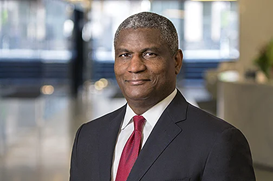
Figure 2. The Honorable Rodney E. Slater. National Archives Foundation. | Rodney E. Slater served as the U.S. Secretary of Transportation (1997–2001) under President Bill Clinton and played a crucial role in shaping and advocating for the Transportation Equity Act for the 21st Century (TEA-21). Signed into law on June 9, 1998, TEA-21 was a landmark transportation bill that expanded access, improved public transit, and promoted economic opportunities for marginalized communities. Key Contributions of TEA-21: - Equity & Inclusion: Ensured historically underserved communities had a voice in transportation planning and benefited from federal investments.
- Record-High Infrastructure Investment: Authorized $218 billion in federal funding for highways, transit, and alternative transportation.
- Job Creation & Economic Growth: Provided funding for training programs to diversify the transportation workforce.
- Public Transit & Sustainability: Increased funding for public transit and congestion relief programs.
Slater’s leadership ensured that transportation policy addressed social justice, economic opportunity, and environmental equity, laying the groundwork for future transportation legislation. |
Robert D. Bullard – The Father of Environmental Justice
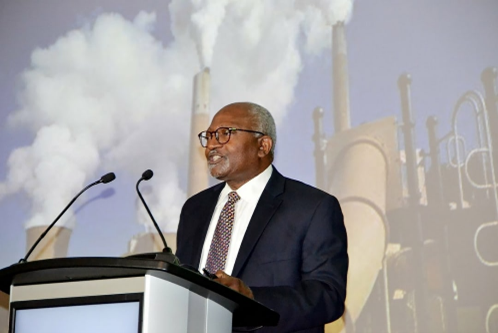
Figure 3. Robert D. Bullard, Ph.D. Bullard Center for Environmental and Climate Justice. | Robert D. Bullard is widely regarded as the “father of environmental justice” due to his groundbreaking research on environmental racism and its impact on marginalized communities. His work has been instrumental in shaping policies that address environmental inequalities in transportation and urban development. Key Contributions: - Landmark Research: His 1990 book, Dumping in Dixie: Race, Class, and Environmental Quality, provided one of the first comprehensive analyses of how hazardous waste facilities were disproportionately placed in Black communities.
- Transportation Equity Advocacy: Bullard has consistently fought against discriminatory transportation policies, highlighting how poor public transit systems negatively affect communities of color, limiting their access to jobs, education, and healthcare.
- Legal & Policy Influence: His research played a major role in influencing the 1994 Executive Order 12898, which directed federal agencies to consider environmental justice in their decision-making processes.
- Climate Justice Leadership: Bullard has expanded his work to address climate change's unequal effects on Black and low-income communities, advocating for policies that reduce pollution and increase sustainable infrastructure investments.
- Sustainable Urban Planning: His advocacy has pushed for equitable urban planning strategies prioritizing clean air, water, and green spaces in historically disadvantaged communities.
Bullard’s work has led to significant reforms in urban planning, transportation policy, and environmental law. His advocacy ensures that Black and marginalized communities are not disproportionately burdened by pollution, inadequate transit, or unsafe infrastructure. Today, his legacy continues through organizations and movements fighting for fair and sustainable urban development. His influence extends to global climate justice efforts, emphasizing the need for fair policies that protect the most vulnerable communities from environmental hazards. |
Garrett Morgan – Inventor of the Traffic Light
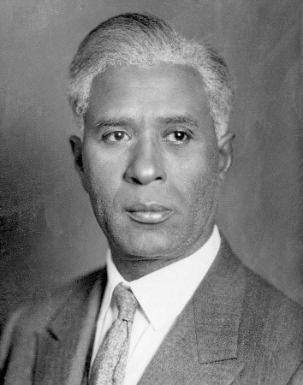
Figure 4. Garrett Morgan. FHWA. Encyclopedia Britannica. | A pioneer in transportation safety, Garrett Morgan patented the three-position traffic signal in 1923. Before his innovation, traffic lights only had “stop” and “go” settings, leading to frequent accidents. His cautionary “all-stop” phase laid the foundation for modern red-yellow-green traffic lights, making roadways safer for drivers and pedestrians worldwide. Morgan devoted his life to creating items that made the lives of common people safer and more convenient. Morgan’s work heavily influenced what we know today as Intelligent Transportation Systems. |
Environmental Justice in North Carolina – The Warren County Protests
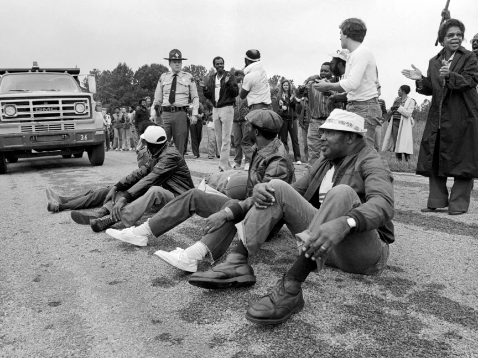
Figure 5. Protestors preventing trucks filled with soil contaminated by polychlorinated biphenyl (PCB) from reaching the proposed Warren County landfill in Afton, NC, September 1982. Ricky Stilley/Henderson Dispatch. | One of the earliest and most significant environmental justice movements began in Warren County, NC, in 1982, when a predominantly Black community protested the state's decision to dump Polychlorinated biphenyl (PCB)-contaminated waste in their neighborhood. Despite widespread arrests, their activism: - Brought national attention to environmental racism.
- Led to the creation of the EPA’s Office of Environmental Justice.
- Influenced future policies on equitable waste disposal.
Organizations such as the NC Environmental Justice Network (NCEJN) and Clean Water for North Carolina continue to fight for fair environmental policies. |
Other Notable Black Figures in Urban Planning & Transportation
- Charlotte L. Brown – Fought racial segregation in San Francisco’s streetcar system in 1863, after being forced off of segregated streetcars multiple times. Brown paved the way for civil rights activism in transit equity, and similar efforts would be echoed by civil rights leaders such as Rosa Parks and Claudette Colvin.
- Dr. R.H. Boyd – Established the Union Transportation Company in 1905 to protest segregated streetcars in Nashville.
- Dr. Beverly Scott—A trailblazer in public transit leadership, she has served as CEO and general manager of major transit agencies and advocates for equity and sustainability in transportation.
The impact of Black Americans in transportation and urban planning is immeasurable. Their work continues to shape equitable infrastructure, safer transit, and sustainable city planning. As we recognize their achievements, we are reminded that transportation is more than just roads and transit—it’s a vehicle for social change and economic empowerment.
Let’s continue to honor these legacies by advocating for equitable and just transportation policies in our communities today.